<br />
<b>Warning</b>:  strpos() expects parameter 1 to be string, array given in <b>/home/theserverside/public_html/wp-includes/blocks.php</b> on line <b>20</b><br />
<?xml version="1.0" encoding="UTF-8"?><rss version="2.0"
	xmlns:content="http://purl.org/rss/1.0/modules/content/"
	xmlns:wfw="http://wellformedweb.org/CommentAPI/"
	xmlns:dc="http://purl.org/dc/elements/1.1/"
	xmlns:atom="http://www.w3.org/2005/Atom"
	xmlns:sy="http://purl.org/rss/1.0/modules/syndication/"
	xmlns:slash="http://purl.org/rss/1.0/modules/slash/"
	>

<channel>
	<title>azure &#8211; The Server Side Technology</title>
	<atom:link href="https://www.theserverside.technology/tag/azure/feed/" rel="self" type="application/rss+xml" />
	<link>https://www.theserverside.technology</link>
	<description>in-depth information for tech pros</description>
	<lastBuildDate>Sat, 21 Aug 2021 18:01:19 +0000</lastBuildDate>
	<language>en-US</language>
	<sy:updatePeriod>
	hourly	</sy:updatePeriod>
	<sy:updateFrequency>
	1	</sy:updateFrequency>
	<generator>https://wordpress.org/?v=6.0.11</generator>
	<item>
		<title>Windows Server 2022 and Azure Stack HCI: Microsoft is slowly attempting to murder Windows Server &#8211; part 1</title>
		<link>https://www.theserverside.technology/2021/08/21/windows-server-2022-and-azure-stack-hci-microsoft-is-slowly-attempting-to-murder-windows-server-part-1/?pk_campaign=feed&#038;pk_kwd=windows-server-2022-and-azure-stack-hci-microsoft-is-slowly-attempting-to-murder-windows-server-part-1</link>
					<comments>https://www.theserverside.technology/2021/08/21/windows-server-2022-and-azure-stack-hci-microsoft-is-slowly-attempting-to-murder-windows-server-part-1/?pk_campaign=feed&#038;pk_kwd=windows-server-2022-and-azure-stack-hci-microsoft-is-slowly-attempting-to-murder-windows-server-part-1#respond</comments>
		
		<dc:creator><![CDATA[The Server-Side Technology Staff]]></dc:creator>
		<pubDate>Sat, 21 Aug 2021 17:58:25 +0000</pubDate>
				<category><![CDATA[News]]></category>
		<category><![CDATA[SysAdmins]]></category>
		<category><![CDATA[Windows Server]]></category>
		<category><![CDATA[azure]]></category>
		<category><![CDATA[azure stack]]></category>
		<category><![CDATA[azure stack hci]]></category>
		<category><![CDATA[linux]]></category>
		<category><![CDATA[microsoft]]></category>
		<category><![CDATA[windows]]></category>
		<category><![CDATA[windows server]]></category>
		<guid isPermaLink="false">https://www.theserverside.technology/?p=1631</guid>

					<description><![CDATA[<div style="margin: 5px 5% 10px 5%;"><img src="https://www.theserverside.technology/wp-content/uploads/2021/08/server2022-300x169.jpg" width="300" height="169" title="" alt="" /></div><div>
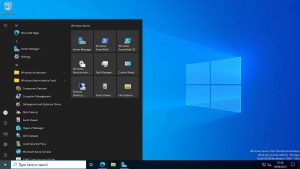
<p>Microsoft released Windows Server 2022 a few weeks ago. It did so earlier than expected, which is pretty odd, but it seems that the development of new features was already complete and mature so there was no point to wait a few months more. The last sentence pretty much explains the current status of Windows Server: so few changes, albeit interesting ones, that the product can be released months earlier than planned and without much fanfare.</p>


<p>While generally speaking the development of new features and functionalities for server applications mostly moved out of the base operating system and while we can also concede that Windows Server has many features at the OS level so it is difficult to design new ones, the fact each new release of Windows Server keeps bringing few new features is definitely because of Microsoft errors. Server applications today are either simple, think about a website or a Web application, or complicated. In the latter case, you generally think about microservices, Kubernetes and so on.</p>


<p>So we might say that since a few years Windows Server became more a tool to build base infrastructures than the base for new applications. That means that you usually install something on top of Windows Server to manage and deploy applications and you don&#8217;t usually rely on OS services only to develop your application. It is safe to say that it is a common scenario because Linux too is experiencing the same transformation.</p>


<p>However, Microsoft could have responded to Linux popularity by upping the ante and push more innovation into Windows Server and they didn&#8217;t.</p>


Windows Server 2022 &#8211; continued fragmentation


<p>The new Windows Server version has some nice and neat features. Besides a better Kubernetes compatibility, which is basically mandatory today, it features and big work to improve security. Credit where is due. That improves a lot both standalone servers security but it is also a fundamental improvement when deploying clusters, the famous infrastructures. </p>


<p>Other improvements include TLS 1.3 enabled by default and a few improvements around SMB, all of them improve security.</p>


<p>There would be other two important features to mention, one of them would be very important, but surprise: they won&#8217;t be available to all customers but only to those using Azure. At least for now.</p>


<p>Microsoft introduced Windows Server Datacenter: Azure Edition, another attempt to fragment Windows Server but the first one to draw a line between &#8220;standard&#8221; Windows Server and Azure versions. And we cannot welcome this kind of behavior because it basically starts to leave non-Azure Windows Server installations behind in an attempt to force Windows customers to move to Azure. Quite frankly, this is indecent especially when you factor how much Windows Server costs when compared to its competitor.</p>


<p>Features that Microsoft is withholding from its non-Azure customers are very important.</p>


<p>First, there is the much awaited hot-patching, that is a way to patch Windows without rebooting. Microsoft aims to use hot-patching especially for security patches and it would be a very ground-breaking innovation when considering how many emergency updates are needed [...]<img src="https://stats1.vaisulweb.cloud/piwik.php?idsite=1&amp;rec=1&amp;url=https%3A%2F%2Fwww.theserverside.technology%2F2021%2F08%2F21%2Fwindows-server-2022-and-azure-stack-hci-microsoft-is-slowly-attempting-to-murder-windows-server-part-1%2F%3Fpk_campaign%3Dfeed%26pk_kwd%3Dwindows-server-2022-and-azure-stack-hci-microsoft-is-slowly-attempting-to-murder-windows-server-part-1&amp;action_name=Windows%20Server%202022%20and%20Azure%20Stack%20HCI%3A%20Microsoft%20is%20slowly%20attempting%20to%20murder%20Windows%20Server%20%26%238211%3B%20part%201&amp;urlref=https%3A%2F%2Fwww.theserverside.technology%2Ffeed%2F" style="border:0;width:0;height:0" width="0" height="0" alt="" /></div>]]></description>
		
					<wfw:commentRss>https://www.theserverside.technology/2021/08/21/windows-server-2022-and-azure-stack-hci-microsoft-is-slowly-attempting-to-murder-windows-server-part-1/?pk_campaign=feed&#038;pk_kwd=windows-server-2022-and-azure-stack-hci-microsoft-is-slowly-attempting-to-murder-windows-server-part-1/feed/</wfw:commentRss>
			<slash:comments>0</slash:comments>
		
		
		<enclosure url="https://www.theserverside.technology/wp-content/uploads/2021/08/server2022.jpg" length="354615" type="image/jpg" />
<media:content xmlns:media="http://search.yahoo.com/mrss/" url="https://www.theserverside.technology/wp-content/uploads/2021/08/server2022-300x169.jpg" width="300" height="169" medium="image" type="image/jpeg">
	<media:copyright>The Server Side Technology</media:copyright>
	<media:title></media:title>
	<media:description type="html"><![CDATA[]]></media:description>
</media:content>
<media:thumbnail xmlns:media="http://search.yahoo.com/mrss/" url="https://www.theserverside.technology/wp-content/uploads/2021/08/server2022-300x169.jpg" width="300" height="169" />
	</item>
		<item>
		<title>Microsoft new OS for IoT devices: Azure Sphere OS</title>
		<link>https://www.theserverside.technology/2018/04/25/microsoft-new-os-for-iot-devices-azure-sphere-os/?pk_campaign=feed&#038;pk_kwd=microsoft-new-os-for-iot-devices-azure-sphere-os</link>
					<comments>https://www.theserverside.technology/2018/04/25/microsoft-new-os-for-iot-devices-azure-sphere-os/?pk_campaign=feed&#038;pk_kwd=microsoft-new-os-for-iot-devices-azure-sphere-os#respond</comments>
		
		<dc:creator><![CDATA[The Server-Side Technology Staff]]></dc:creator>
		<pubDate>Wed, 25 Apr 2018 12:19:19 +0000</pubDate>
				<category><![CDATA[Development]]></category>
		<category><![CDATA[Internet of Things]]></category>
		<category><![CDATA[azure]]></category>
		<category><![CDATA[azure sphere]]></category>
		<category><![CDATA[certificate]]></category>
		<category><![CDATA[containers]]></category>
		<category><![CDATA[editor pick]]></category>
		<category><![CDATA[Editor's Pick]]></category>
		<category><![CDATA[iot]]></category>
		<category><![CDATA[linux]]></category>
		<category><![CDATA[microcontroller]]></category>
		<category><![CDATA[open-source]]></category>
		<category><![CDATA[security]]></category>
		<category><![CDATA[vaisulweb]]></category>
		<guid isPermaLink="false">http://www.theserverside.technology/?p=1274</guid>

					<description><![CDATA[<div style="margin: 5px 5% 10px 5%;"><img src="https://www.theserverside.technology/wp-content/uploads/2018/04/P3-Cloud-1399x730-300x157.png" width="300" height="157" title="" alt="" /></div><div><p>A few days ago Microsoft introduced its new operating system designed for IoT devices: Azure Sphere OS. The new operating system aims at providing a secure-by-default platform to build IoT services and thus avoiding the pitfalls that made such devices so prone even to unsophisticated attacks that rogue organizations use them to build botnets or to compromise users&#8217; privacy.</p>
<p>The new OS</p>
<p>Azure Sphere is just a part of a broader solution to provide a secure platform for IoT that also includes custom microcontrollers that implement Microsoft 7 rules for IoT security and a security service that runs on Azure to verify the status of each device and report any error or possible compromission. That service will also provide updates to the OS and possibly remediation services for misbehaving devices.</p>
<p></p>
<p>Considerations</p>
<p>While many users on the Internet focused on the fact that Azure Sphere OS is based on a modified Linux kernel, Microsoft solution is quite more complicated than that. Many have been surprised by the fact that Microsoft is essentially providing a Linux distribution, though it isn&#8217;t the first time that Microsoft is shipping Unix if one remembers Xenix old days, but there are more interesting things about this solution other than the kernel that OS is running.</p>
<p>For sure it is interesting that Microsoft decided that Windows is too heavy to run onto microcontrollers and it resorted to a Linux-based solution. While many speculate about the inability of Microsoft to create a lightweight version of Windows, I think that they choose Linux for a simple reason: to gain some traction into the IoT space they obviously need to open-source the OS and I don&#8217;t think that they would be ready to provide an open-source version of Windows, albeit highly customized. At the same time, it would be difficult to push IoT partners into its camp with a closed-source software, given that most of them rely on free and lightweight specialized Linux distributions.</p>
<p style="text-align: center;"></p>
<p>Moreover, since when Azure started, Microsoft became more a services provider rather than a software maker so its main goal is to create software that could be plugged into Azure whatever it is based upon. So no surprises that they decided not to reinvent the wheel by using an highly customized Linux-based environment and extend it with &#8220;Windows-inspired security features&#8221;. Microsoft also ran custom chips for years in their Xbox consoles.</p>
<p><p>It would be difficult to push IoT partners into its camp with a closed-source software, given that most of them rely on free and lightweight specialized Linux distributions</p></p>
<p>What is more interesting is the fact that Microsoft used containers to secure that environment. While for sure Azure Sphere OS has a specialized version of containerization, containers are emerging as a key mechanism to save resources while providing a high degree of security. Microsoft already implemented containers into its Windows Server 2016 and refined the concept to be able to run Linux as a part of Windows and it also provides Linux containers on a Windows machine, thus dramatically improving productivity and [...]<img src="https://stats1.vaisulweb.cloud/piwik.php?idsite=1&amp;rec=1&amp;url=https%3A%2F%2Fwww.theserverside.technology%2F2018%2F04%2F25%2Fmicrosoft-new-os-for-iot-devices-azure-sphere-os%2F%3Fpk_campaign%3Dfeed%26pk_kwd%3Dmicrosoft-new-os-for-iot-devices-azure-sphere-os&amp;action_name=Microsoft%20new%20OS%20for%20IoT%20devices%3A%20Azure%20Sphere%20OS&amp;urlref=https%3A%2F%2Fwww.theserverside.technology%2Ffeed%2F" style="border:0;width:0;height:0" width="0" height="0" alt="" /></div>]]></description>
		
					<wfw:commentRss>https://www.theserverside.technology/2018/04/25/microsoft-new-os-for-iot-devices-azure-sphere-os/?pk_campaign=feed&#038;pk_kwd=microsoft-new-os-for-iot-devices-azure-sphere-os/feed/</wfw:commentRss>
			<slash:comments>0</slash:comments>
		
		
		<enclosure url="https://www.theserverside.technology/wp-content/uploads/2018/04/P3-Cloud-1399x730.png" length="27854" type="image/jpg" />
<media:content xmlns:media="http://search.yahoo.com/mrss/" url="https://www.theserverside.technology/wp-content/uploads/2018/04/P3-Cloud-1399x730-300x157.png" width="300" height="157" medium="image" type="image/jpeg">
	<media:copyright>The Server Side Technology</media:copyright>
	<media:title></media:title>
	<media:description type="html"><![CDATA[]]></media:description>
</media:content>
<media:thumbnail xmlns:media="http://search.yahoo.com/mrss/" url="https://www.theserverside.technology/wp-content/uploads/2018/04/P3-Cloud-1399x730-300x157.png" width="300" height="157" />
	</item>
		<item>
		<title>How to run PHP 7 x64/x86 on Windows Azure Pack</title>
		<link>https://www.theserverside.technology/2015/12/26/how-to-run-php-7-x64-x86-on-windows-azure-pack/?pk_campaign=feed&#038;pk_kwd=how-to-run-php-7-x64-x86-on-windows-azure-pack</link>
					<comments>https://www.theserverside.technology/2015/12/26/how-to-run-php-7-x64-x86-on-windows-azure-pack/?pk_campaign=feed&#038;pk_kwd=how-to-run-php-7-x64-x86-on-windows-azure-pack#respond</comments>
		
		<dc:creator><![CDATA[Guglielmo Mengora]]></dc:creator>
		<pubDate>Sat, 26 Dec 2015 20:47:34 +0000</pubDate>
				<category><![CDATA[Development]]></category>
		<category><![CDATA[Web Technologies]]></category>
		<category><![CDATA[azure]]></category>
		<category><![CDATA[PHP]]></category>
		<category><![CDATA[windows azure pack]]></category>
		<guid isPermaLink="false">http://www.theserverside.technology/?p=921</guid>

					<description><![CDATA[<div style="margin: 5px 5% 10px 5%;"><img src="https://www.theserverside.technology/wp-content/uploads/2015/12/php_code-300x240.jpg" width="300" height="240" title="" alt="" /></div><div><p>PHP 7 has been released on December 3rd and its first update (v7.0.1) has been released on December 17th. This new version brings a lot of changes in, including major performance enhancements compared to PHP 5.6 (up to a 2x performance increase!), better (meaning reduced) memory footprint plus support for 64bit runtimes. There are of course many other enhancements but those three alone should provide a good reason to update websites to the new version. There could be problems in doing so if you are using deprecated or non-supported code but if your application followed recommendations, you should be able to upgrade to PHP7 and enjoy the enhancements.</p>
<p>There are a few handful extensions that bring PHP7 (RC and now RTW) to Azure but those extensions, while providing a good starting point, are not compatible with Windows Azure Pack because of a few hiccups in installation scripts (basically referencing D: drive, as in Azure, instead of C: as in WAP or using %HOME% environment variable to solve this problem and keep the scripts compatible with both). However, this is a good chance to explore once again the flexibility of Windows Azure Pack and configure PHP7 on our own, something useful to update/upgrade at a later time, if needed, without waiting for someone else to provide a new script for it. Having PHP 7 working could be useful to upgrade compatible applications like WordPress, which is already compatible with this new version.</p>
<p>This tutorial has been tested on VaiSulWeb Cloud Hosting services. As our company provides a free account for development and testing, it is easy to start working with PHP7 or ASP.NET 5 by the way. Head up on our website to request your free account.</p>
Getting started
<p>As a first step we need to download PHP7 from its website, taking care to download Windows binaries we need for our tests. Head to download page and look for VC14 x64 Non-Thread-Safe (NTS) distribution (php-7.0.1-nts-Win32-VC14-x64.zip) as we want to experience x64 version for our tutorial. Once downloaded, we can unZIP that file and move its contents to our site via FTP. We will upload file contents into /site/bin/php folder so our file structure will be like this:</p>
<p style="padding-left: 30px;">site/</p>
<p style="padding-left: 60px;">bin/</p>
<p style="padding-left: 90px;">php/</p>
<p style="padding-left: 120px;">dev
 ext
 [&#8230;]
php.ini
[&#8230;]
 php-cgi.exe
 [&#8230;]</p>
<p style="padding-left: 30px;">wwwroot</p>
<p>Now that we uploaded a new PHP distribution to our website, we need to solve two problems before being able to run our own PHP runtime: the first one is telling WAP that we want to use this new version in place of runtimes automatically supported by the platform (v5.3 through v5.5) as shown below:</p>
<p><p id="caption-attachment-933" class="wp-caption-text">PHP runtimes available through Windows Azure Pack portal</p></p>
<p>&#160;</p>
<p>The second problem we have is to tell PHP where to find its configuration file, the famous php.ini. When using default runtimes, Azure Pack will tell PHP where to find its configuration file but now we want to use a custom runtime so we need to find a way to point PHP to the INI file that we will upload into /site/bin/php/ folder. [...]<img src="https://stats1.vaisulweb.cloud/piwik.php?idsite=1&amp;rec=1&amp;url=https%3A%2F%2Fwww.theserverside.technology%2F2015%2F12%2F26%2Fhow-to-run-php-7-x64-x86-on-windows-azure-pack%2F%3Fpk_campaign%3Dfeed%26pk_kwd%3Dhow-to-run-php-7-x64-x86-on-windows-azure-pack&amp;action_name=How%20to%20run%20PHP%207%20x64%2Fx86%20on%20Windows%20Azure%20Pack&amp;urlref=https%3A%2F%2Fwww.theserverside.technology%2Ffeed%2F" style="border:0;width:0;height:0" width="0" height="0" alt="" /></div>]]></description>
		
					<wfw:commentRss>https://www.theserverside.technology/2015/12/26/how-to-run-php-7-x64-x86-on-windows-azure-pack/?pk_campaign=feed&#038;pk_kwd=how-to-run-php-7-x64-x86-on-windows-azure-pack/feed/</wfw:commentRss>
			<slash:comments>0</slash:comments>
		
		
		<enclosure url="https://www.theserverside.technology/wp-content/uploads/2015/12/php_code.jpg" length="379749" type="image/jpg" />
<media:content xmlns:media="http://search.yahoo.com/mrss/" url="https://www.theserverside.technology/wp-content/uploads/2015/12/php_code-300x240.jpg" width="300" height="240" medium="image" type="image/jpeg">
	<media:copyright>The Server Side Technology</media:copyright>
	<media:title></media:title>
	<media:description type="html"><![CDATA[]]></media:description>
</media:content>
<media:thumbnail xmlns:media="http://search.yahoo.com/mrss/" url="https://www.theserverside.technology/wp-content/uploads/2015/12/php_code-300x240.jpg" width="300" height="240" />
	</item>
		<item>
		<title>Amazon risponde ad Azure IoT con Firehose</title>
		<link>https://www.theserverside.technology/2015/10/20/amazon-risponde-ad-azure-iot-con-firehose/?pk_campaign=feed&#038;pk_kwd=amazon-risponde-ad-azure-iot-con-firehose</link>
					<comments>https://www.theserverside.technology/2015/10/20/amazon-risponde-ad-azure-iot-con-firehose/?pk_campaign=feed&#038;pk_kwd=amazon-risponde-ad-azure-iot-con-firehose#respond</comments>
		
		<dc:creator><![CDATA[The Server-Side Technology Staff]]></dc:creator>
		<pubDate>Tue, 20 Oct 2015 23:07:03 +0000</pubDate>
				<category><![CDATA[Cloud Technologies]]></category>
		<category><![CDATA[Mobile devices]]></category>
		<category><![CDATA[News]]></category>
		<category><![CDATA[amazon]]></category>
		<category><![CDATA[azure]]></category>
		<category><![CDATA[iot]]></category>
		<category><![CDATA[quicksight]]></category>
		<category><![CDATA[redshift]]></category>
		<category><![CDATA[s3]]></category>
		<guid isPermaLink="false">http://www.theserverside.technology/?p=761</guid>

					<description><![CDATA[<div style="margin: 5px 5% 10px 5%;"><img src="https://www.theserverside.technology/wp-content/uploads/2015/10/aws_logo_1300-300x169.jpg" width="300" height="169" title="" alt="" /></div><div><p>Amazon risponde ad Azure nel settore dell&#8217;Internet of things (IoT) presentando Kinesis Firehose, un sistema capace di aggregare dati da un numero molto elevato di dispositivi wireless ed embedded e trasferirli nella propria piattaforma di memorizzazione cloud, senza che le aziende debbano sviluppare applicazioni specifiche. Firehose è molto simile a Kinesis Streams ma quest&#8217;ultima richiedeva lo sviluppo di applicazioni specifiche per il collegamento agli endpoint dei servizi mentre con la nuova versione l&#8217;offerta di Amazon è molto vicina a quella di Azure IoT.</p>
<p>Firehose, disponibile da subito, consente alle aziende di sfruttare una API unificata per trasferire i dati dei dispositivi nel database Redshift o nel sistema di storage S3. Firehose consentirà lo scaling elastico con la possibilità di ridimensionare il servizio (per aumentarlo o diminuirlo) a seconda delle necessità, adattando quindi il carico ed i relativi costi.</p>
<p>Una volta che i dati siano stati trasferiti in Redshift o S3, possono essere condivisi con tutti i servizi di Amazon come il sistema di business intelligence QuickSight, in modo da poterli usare per analisi, dashboard aziendali o operazioni di marketing personalizzate. Inoltre, Firehose è in grado di acquisire dati da campagne digitali su sistemi mobili o digital advertising, oltre che da device IoT.</p>
<p>Con questa release, Amazon si allinea alle altre grandi aziende IT come Microsoft, IBM ed altre, nel creare un set completo di servizi IoT per convincere i propri clienti a rimanere con un soggetto unico per tutte le loro necessità di analisi e gestione dei dati.</p>
<img src="https://stats1.vaisulweb.cloud/piwik.php?idsite=1&amp;rec=1&amp;url=https%3A%2F%2Fwww.theserverside.technology%2F2015%2F10%2F20%2Famazon-risponde-ad-azure-iot-con-firehose%2F%3Fpk_campaign%3Dfeed%26pk_kwd%3Damazon-risponde-ad-azure-iot-con-firehose&amp;action_name=Amazon%20risponde%20ad%20Azure%20IoT%20con%20Firehose&amp;urlref=https%3A%2F%2Fwww.theserverside.technology%2Ffeed%2F" style="border:0;width:0;height:0" width="0" height="0" alt="" /></div>]]></description>
		
					<wfw:commentRss>https://www.theserverside.technology/2015/10/20/amazon-risponde-ad-azure-iot-con-firehose/?pk_campaign=feed&#038;pk_kwd=amazon-risponde-ad-azure-iot-con-firehose/feed/</wfw:commentRss>
			<slash:comments>0</slash:comments>
		
		
		<enclosure url="https://www.theserverside.technology/wp-content/uploads/2015/10/aws_logo_1300.jpg" length="146592" type="image/jpg" />
<media:content xmlns:media="http://search.yahoo.com/mrss/" url="https://www.theserverside.technology/wp-content/uploads/2015/10/aws_logo_1300-300x169.jpg" width="300" height="169" medium="image" type="image/jpeg">
	<media:copyright>The Server Side Technology</media:copyright>
	<media:title></media:title>
	<media:description type="html"><![CDATA[]]></media:description>
</media:content>
<media:thumbnail xmlns:media="http://search.yahoo.com/mrss/" url="https://www.theserverside.technology/wp-content/uploads/2015/10/aws_logo_1300-300x169.jpg" width="300" height="169" />
	</item>
		<item>
		<title>How to run ASP.NET beta8 on Windows Azure Pack WebSites v2</title>
		<link>https://www.theserverside.technology/2015/10/18/how-to-run-asp-net-beta8-on-windows-azure-pack-websites-v2/?pk_campaign=feed&#038;pk_kwd=how-to-run-asp-net-beta8-on-windows-azure-pack-websites-v2</link>
					<comments>https://www.theserverside.technology/2015/10/18/how-to-run-asp-net-beta8-on-windows-azure-pack-websites-v2/?pk_campaign=feed&#038;pk_kwd=how-to-run-asp-net-beta8-on-windows-azure-pack-websites-v2#respond</comments>
		
		<dc:creator><![CDATA[Guglielmo Mengora]]></dc:creator>
		<pubDate>Sun, 18 Oct 2015 08:43:30 +0000</pubDate>
				<category><![CDATA[Cloud Technologies]]></category>
		<category><![CDATA[Development]]></category>
		<category><![CDATA[asp.net]]></category>
		<category><![CDATA[azure]]></category>
		<category><![CDATA[beta]]></category>
		<category><![CDATA[cloud]]></category>
		<category><![CDATA[editor pick]]></category>
		<category><![CDATA[httpplatformhandler]]></category>
		<category><![CDATA[iis]]></category>
		<category><![CDATA[powershell]]></category>
		<category><![CDATA[scm]]></category>
		<category><![CDATA[windows azure pack]]></category>
		<guid isPermaLink="false">http://www.theserverside.technology/?p=695</guid>

					<description><![CDATA[<div style="margin: 5px 5% 10px 5%;"><img src="https://www.theserverside.technology/wp-content/uploads/2015/10/wap_1161-300x169.jpg" width="300" height="169" title="" alt="" /></div><div><p>A few days ago Microsoft released ASP.NET 5 beta8, the first feature-complete version of its flagship Web framework. A lot of expectations come with this new version, both because Microsoft decided to change ASP.NET down to its basis and because this one will be the first multi-platform release for the technology, allowing developers to run their Web or console applications on Windows, Linux and Mac OS X. However, the new version will also be the first one designed from the ground up for the cloud era and thus adopting all methodologies, technologies and conventions that emerged in past few years. As we detailed in a past article (sorry: Italian language only this time!), ASP.NET 5 will also change the way ASP.NET will be hosted on Windows because it will run through the famous HTTPPlatformHandler module that enabled Azure to run basically any runtime, including Java, Python, RoR and more. Later, that module has been channeled down to partners and Windows Azure Pack incorporated it in UR7.</p>
<p>You might be running your website or application on Windows Azure Pack and, if you do, I do really hope that you&#8217;re hosting with us at VaiSulWeb since we also have free accounts for you to try ASP.NET 5. However, even if you&#8217;re hosting at another service provider, you might be wondering if you will be able to run ASP.NET 5 starting from beta8, since this version switches to HTTPPlatformHandler. Up until beta7, hosting with Azure Pack was very easy: you only needed to publish your project to a folder and then upload that package to your WAP account. Everything was working fine since the very first second.</p>
 Spoiler: scroll down for a quick solution
<p>There&#8217;s a quick solution waiting for you at the end of this article. If you&#8217;re only interested in understanding how you can run ASP.NET 5 from beta8 using WAP, just skip this lengthy explanation and run to the end. This article will be used to as an handy excuse to showcase some nice features that Windows Azure Pack provide its users and that our company provides its customers. We will use such features to understand what&#8217;s going on with beta8 and then provide a quick solution to host it on WAP.</p>
 Publishing your beta8 to your WAP account : Redmond we have a problem&#8230;
<p>So you just started a new project based on ASP.NET 5 beta8 in Visual Studio 2015 or you just created a template project to check how things would shape up. Quick and easy. Now you would like to upload that project to your Web hosting account to check if your provider is compatible with the technology. So you just export your project&#8230;</p>
<p><p id="caption-attachment-707" class="wp-caption-text">Publishing your project to file system</p></p>
<p>&#8230; publishing to file system, the same way you did up to beta7. Then, after that operation completes, you upload your project on your WAP accounts via FTP or WebDeploy. Compilation time, just a few seconds, and then&#8230; uh ?</p>
<p>It seems that something went wrong since no shiny MVC homepage appears in your [...]<img src="https://stats1.vaisulweb.cloud/piwik.php?idsite=1&amp;rec=1&amp;url=https%3A%2F%2Fwww.theserverside.technology%2F2015%2F10%2F18%2Fhow-to-run-asp-net-beta8-on-windows-azure-pack-websites-v2%2F%3Fpk_campaign%3Dfeed%26pk_kwd%3Dhow-to-run-asp-net-beta8-on-windows-azure-pack-websites-v2&amp;action_name=How%20to%20run%20ASP.NET%20beta8%20on%20Windows%20Azure%20Pack%20WebSites%20v2&amp;urlref=https%3A%2F%2Fwww.theserverside.technology%2Ffeed%2F" style="border:0;width:0;height:0" width="0" height="0" alt="" /></div>]]></description>
		
					<wfw:commentRss>https://www.theserverside.technology/2015/10/18/how-to-run-asp-net-beta8-on-windows-azure-pack-websites-v2/?pk_campaign=feed&#038;pk_kwd=how-to-run-asp-net-beta8-on-windows-azure-pack-websites-v2/feed/</wfw:commentRss>
			<slash:comments>0</slash:comments>
		
		
		<enclosure url="https://www.theserverside.technology/wp-content/uploads/2015/10/wap_1161.jpg" length="153924" type="image/jpg" />
<media:content xmlns:media="http://search.yahoo.com/mrss/" url="https://www.theserverside.technology/wp-content/uploads/2015/10/wap_1161-300x169.jpg" width="300" height="169" medium="image" type="image/jpeg">
	<media:copyright>The Server Side Technology</media:copyright>
	<media:title></media:title>
	<media:description type="html"><![CDATA[]]></media:description>
</media:content>
<media:thumbnail xmlns:media="http://search.yahoo.com/mrss/" url="https://www.theserverside.technology/wp-content/uploads/2015/10/wap_1161-300x169.jpg" width="300" height="169" />
	</item>
	</channel>
</rss>